Ingredients
Method
- Using a sharp knife, prick the pork skin several times without cutting too deeply into the meat. Rub the vinegar all over the pork and let it coat every side.
- Season the pork evenly with salt, garlic powder, and black pepper, making sure all surfaces are well coated.
- Place the pork on a plate or tray with the skin facing up. Refrigerate uncovered overnight so the skin dries out, which helps create an extra crispy crackling.
- The next day, pat the pork completely dry using paper towels. Place it on a roasting rack inside a roasting pan so hot air can circulate underneath.
- Roast in a preheated 180°F (82°C) oven for about 3 hours.
- Increase the oven temperature to 320°F (160°C) and continue roasting for another 1 to 1½ hours, or until the pork is fully cooked and lightly browned.
- Raise the oven temperature to 430°F (220°C) and roast for another 30 to 40 minutes, or until the skin becomes deeply golden and irresistibly crispy.
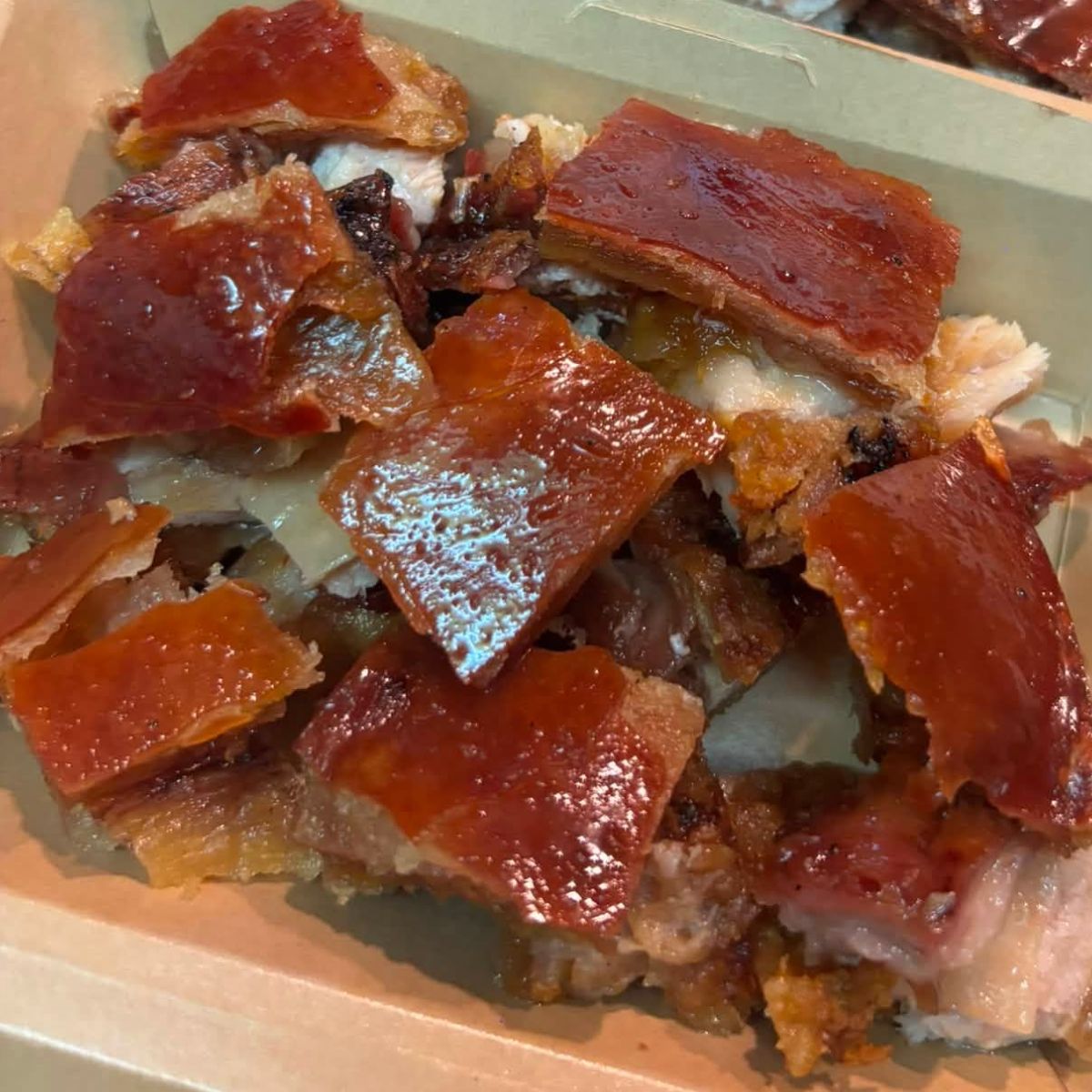
- Let the lechon rest for about 10 minutes before slicing. Chop into serving pieces and enjoy while the skin is still wonderfully crunchy.
Notes
The biggest secret to crispy lechon isn't a fancy seasoning, it's patience. Letting the pork chill uncovered overnight allows the skin to dry, and dry skin equals better crackling.
Always roast the pork on a wire rack instead of placing it directly in a baking dish. The rack allows the hot air to circulate evenly and keeps the rendered fat from soaking the skin, helping it stay crisp.
If some areas brown faster than others during the final high-heat roasting, rotate the pan instead of extending the cooking time too much. Every oven heats a little differently, and a quick rotation usually solves the problem.
Finally, resist the urge to slice the pork immediately. A short resting time keeps the juices inside the meat instead of running all over the cutting board.